
When the tax rate itself is on the ballot.
A voter approval tax rate election asks voters to ratify a rate the governing body already adopted. The ballot says it is a tax increase. The campaign decides who reads that and how they vote.
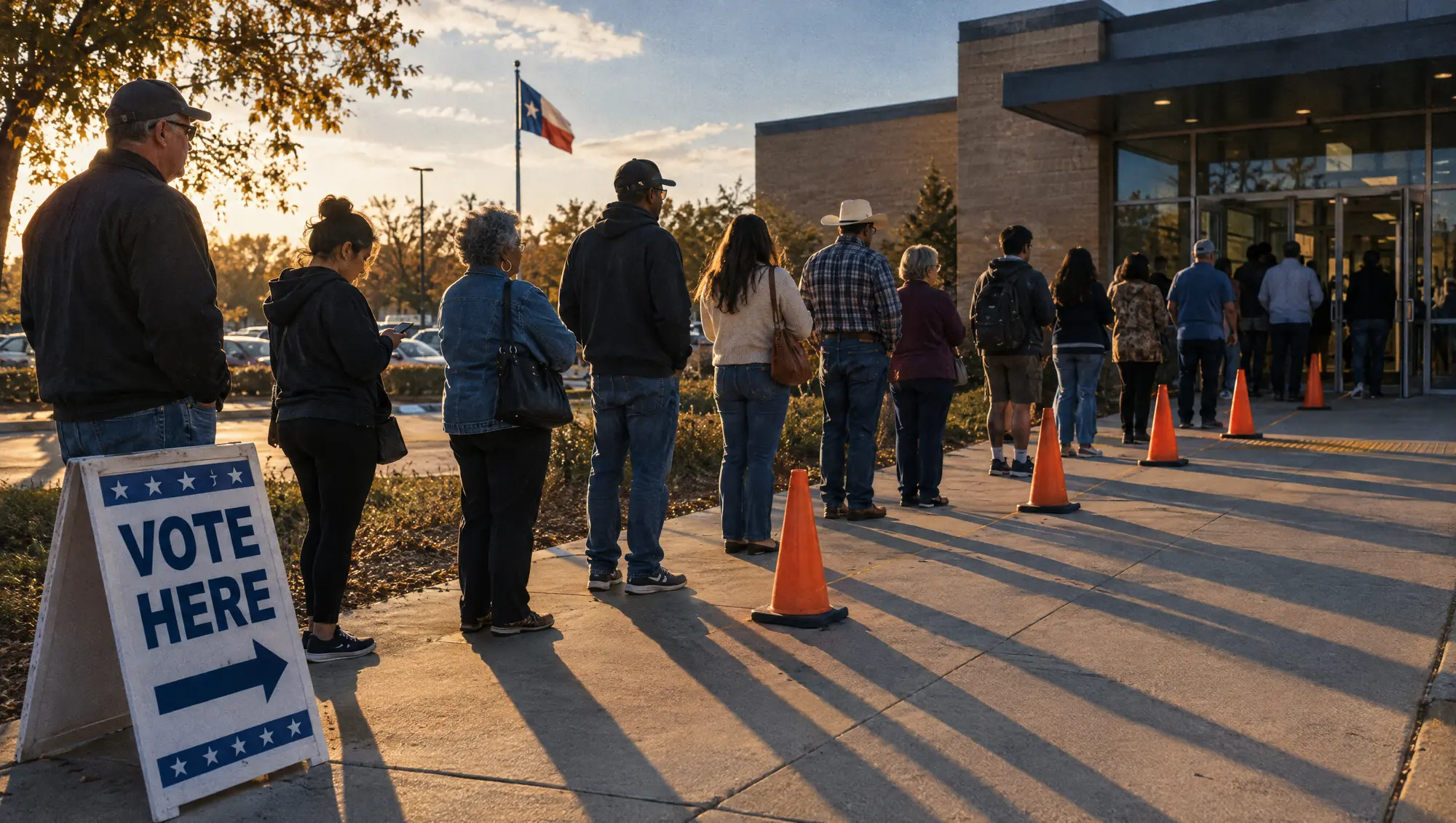
What is a voter approval tax rate election (VATRE)?
In Texas, a VATRE is an election to ratify a property tax rate that is higher than the voter approval rate state law allows a taxing unit to adopt on its own. School districts, cities, counties and some special districts can trigger one. The ballot states the proposed rate and that it is a tax increase. URSA runs campaigns for the committees supporting or opposing the rate, and factual information for the taxing unit itself.
How a Tax Rate Ends Up on the Ballot
Since 2019, Texas law sets a voter approval rate for each taxing unit, a ceiling on how much it can raise its operating tax revenue in a year without asking voters. For most cities and counties the line is about 3.5 percent more maintenance and operations revenue than the year before. Special taxing units and school districts have their own formulas.
When a governing body adopts a rate above that line, state law requires an election to ratify it, usually on the November uniform election date. If voters approve, the rate stands. If they reject it, the taxing unit falls back to the voter approval rate.
For school districts the ballot asks voters to ratify a specific total rate, and the proposition says it is a tax increase. That is the first thing voters read, and both sides have to plan around it.
The number on the ballot and the number on a family's tax bill are not the same number. The campaign that explains the difference wins.
The Same Rate, Four Different Voters
A tax rate change lands differently on each kind of property. County appraisal district (CAD) data tells us which household is which.
| Voter | What is true for them | What they need to hear |
|---|---|---|
| Homeowner under 65 | Pays the rate on taxable value after exemptions, every year. | Their own annual dollar change, with a calculator to check it. |
| Homeowner 65 or older | School taxes on the homestead are generally frozen at a ceiling. | The budget, the debt and accountability. A pocketbook line rings false. |
| Renter | Pays no property tax directly. | How taxes on rental property show up in rent. |
| Business and multifamily owner | No homestead exemption, so the full rate applies to every dollar of value. | Their own exposure, in a direct letter. |
Illustrative. Every campaign uses the taxing unit's own published figures and current law.
How We Run a VATRE Campaign
Do the math the voter will do
The proposed rate, the current rate, the no-new-revenue rate and what each means for real properties at real values, from the taxing unit's own numbers.
Build the universe from parcels
Every parcel in the taxing unit from CAD records, matched to the voter file in Culper: owners, homesteads, seniors with a ceiling, commercial and multifamily.
Give each audience its true argument
A message matrix so seniors, younger homeowners, renters and owners each hear the line that applies to them. See messaging strategy.
Put a calculator in their hands
A landing page where any homeowner enters a value and sees the change. Numbers people find themselves persuade best.
Reach the reliable voters
Streaming TV, digital and P2P to likely voters, scrubbed daily during early voting.
Point to the bottom of the ballot
In November, the rate proposition can be one of the last items. Every piece tells voters where to find it.
What triggers a tax rate election in Texas?
A taxing unit that adopts a property tax rate above its voter approval rate must hold an election for voters to ratify it. For most cities and counties, the voter approval rate allows about 3.5 percent more maintenance and operations revenue than the prior year. School districts and special taxing units use different formulas.
What is the no-new-revenue tax rate?
The no-new-revenue rate is the rate that would raise the same amount of property tax revenue from the same properties as the year before. It is published alongside the voter approval rate so taxpayers can compare.
What happens if voters reject a VATRE?
If voters reject the proposed rate, the taxing unit's rate for that year is reduced to the voter approval rate.
Is a VATRE the same as a bond election?
No. A bond election asks permission to borrow for specific projects, repaid by a debt service tax. A VATRE asks voters to ratify an operating tax rate. A district can hold both on the same ballot. See school district bond elections.
Can a school district campaign for its own VATRE?
No. Texas Election Code Section 255.003 bars a political subdivision from spending public funds on political advertising. A district may provide factual information. Advocacy is run by a privately funded political committee.
Keep reading.
- School District Bond ElectionsURSA runs campaigns for and against Texas school district bond propositions and tax rate elections, with property tax calculators, CAD based targeting, senior tax ceiling messaging and daily early vote scrubs.
- PACs and Issue CampaignsURSA runs advocacy campaigns for political committees supporting or opposing ESD, CAD, school bond and tax rate propositions: targeting, creative, media and turnout, with disclosures on every piece.
- Messaging and Campaign StrategyURSA builds the plan behind a winning campaign: the ballot and the math, who decides the race, what each audience needs to hear, the answers to the other side, and a timeline built around early voting.
Your victory starts here.
Tell us where you are running or what is on your ballot. We will show you who decides it, what moves them, and what it costs to reach them.
Schedule a Consultation