
When the fire department is on the ballot.
Emergency Services Districts fund the fire and EMS crews that answer 911 calls in much of Texas, and when an ESD needs voters to approve a sales tax, a tax rate or a new district, very few people turn out to decide it. We make sure the right ones know what is on the ballot and why it matters to them.
What is an ESD tax election in Texas?
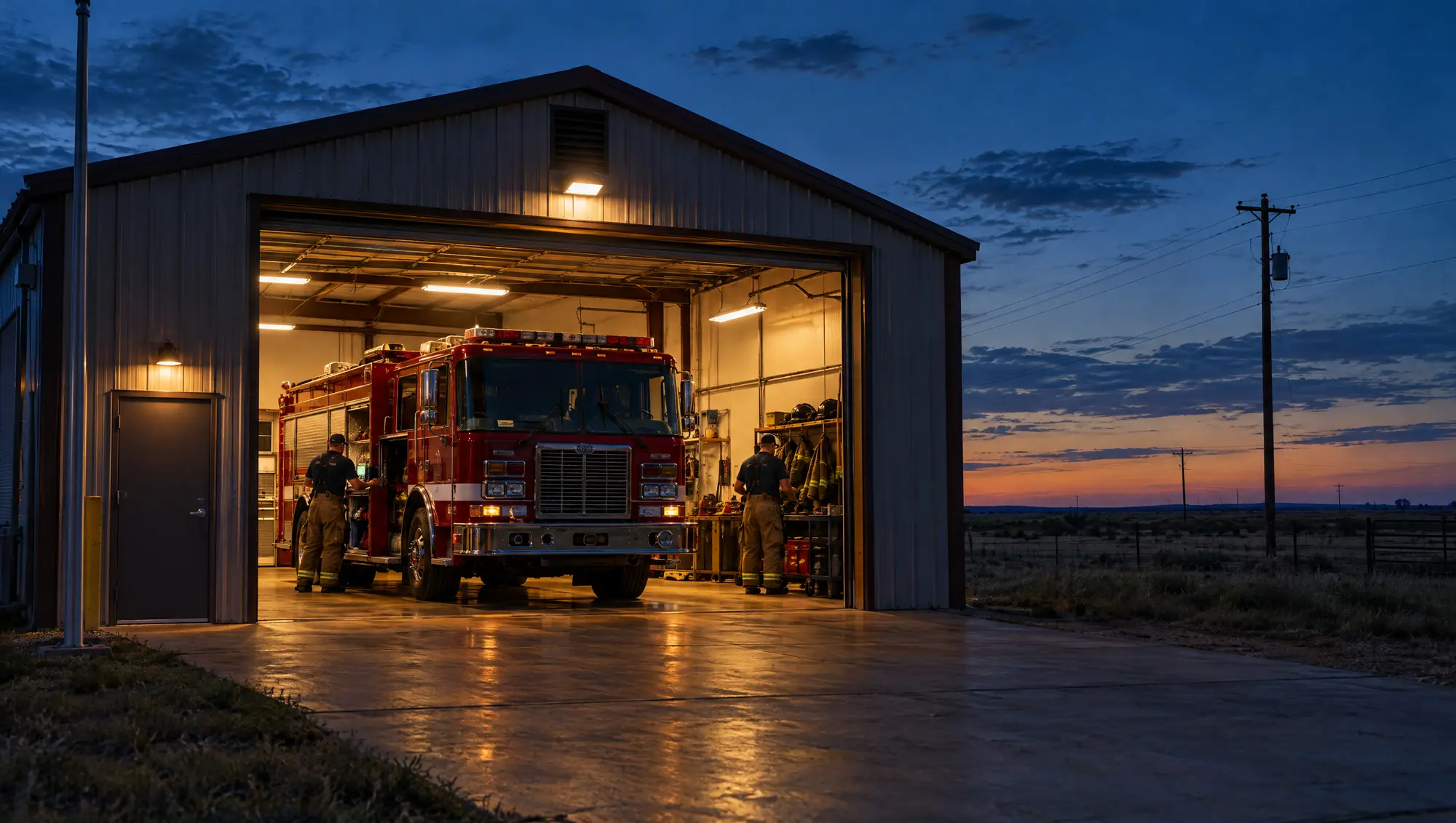
An Emergency Services District (ESD) is a Texas political subdivision, created under Chapter 775 of the Health and Safety Code, that funds fire protection and emergency medical services. ESDs need voter approval to be created, to adopt, change or abolish a local sales and use tax, and in some cases to raise their property tax rate. URSA runs factual voter education for the districts themselves and persuasion campaigns for the separate PACs that support them.
What Is on an ESD Ballot
Texas ESDs are funded mainly by a property tax on homes and businesses inside the district, capped by the state constitution at 10 cents per $100 of value. As a district grows, call volumes rise, new stations are needed, and the property tax alone often cannot keep up. That is when an ESD goes to the voters.
The most common ESD elections are sales and use tax elections. Under Health and Safety Code Section 775.0751, an ESD can adopt, change or abolish a sales tax only through an election, at a rate from one eighth of one percent up to two percent in one eighth steps, and only where the combined local sales tax would not exceed the two percent cap. A district that would otherwise exceed the cap can exclude areas already at two percent. Sales tax is attractive because it is paid by everyone who shops in the district, including visitors and through traffic, not only property owners.
Other ESD elections include creation elections for a new district, tax rate elections when a district adopts a rate above its voter approval rate, and elections to expand a district's territory. Each has its own ballot language and its own voters.
We know both sides.
We have run these campaigns for supporters and for opponents, so we know the other side's playbook before they open it.
The crews are the message.
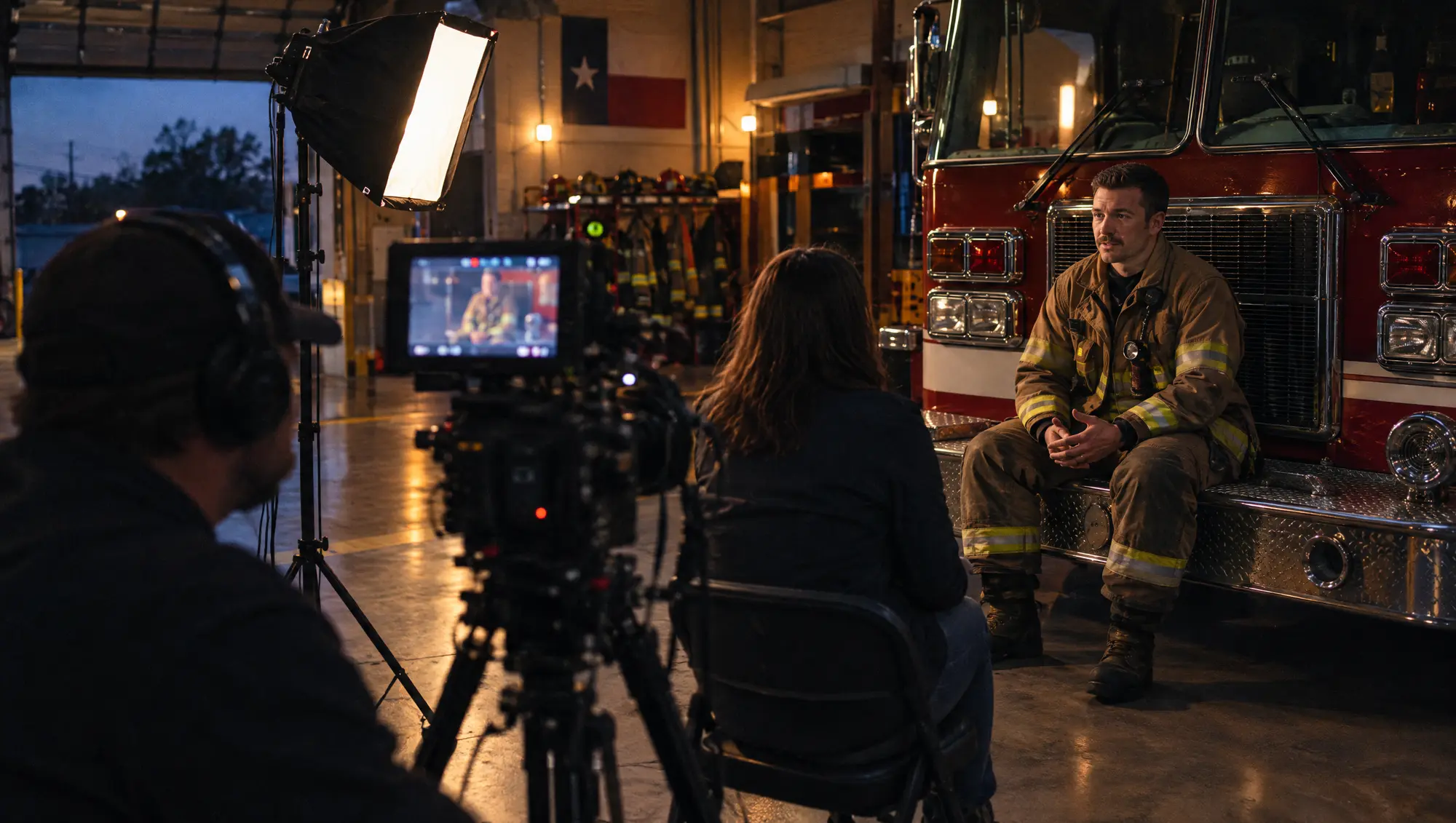
Firefighters and paramedics are the most trusted messengers a campaign can have. We put them on screen doing the work: training, equipment checks, the ride out. Voters see exactly what the tax pays for.
For the district, that is factual public information. For the supporting PAC, the same footage carries the ask.
Two Kinds of Work, Kept Separate
ESD elections involve two different clients with two different sets of rules. We do both, and we never mix them.
Voter education for the district
- Paid for with public funds, so it must stay factual and informational.
- Texas Election Code Section 255.003 bars a political subdivision from spending public funds on political advertising, with an exception for communications that factually describe the purpose of a measure without advocating for or against it.
- Explains what is on the ballot, what the tax would fund, what it would cost, and when and where to vote.
- Videos, mailers, websites, social posts and town hall material that inform without telling anyone how to vote.
Advocacy for the supporting PAC
- Paid for by a specific purpose political committee with private funds.
- Can ask directly for a YES vote, and should.
- Uses the full toolkit: micro-targeting, streaming TV, P2P persuasion scripts, outdoor and mail.
- Carries the PAC's political advertising disclosure on every piece.
What Moves ESD Voters
People support their fire department. The work is turning that goodwill into votes, in an election most of them do not know is happening.
Response times, close to home
How long it takes a truck to reach their subdivision, and what a new station would change. This is micro-targeting at its most literal: the message is different on every side of the district.
Who pays
A sales tax is paid by shoppers, including visitors and people driving through, not only by the homeowners in the district. For many voters that is the whole argument.
The crews themselves
Firefighters and paramedics are the most trusted messengers a campaign can have. Training video, real equipment and real people do more than any graphic.
What they protect
Many districts have seen rapid growth, and new roofs mean new calls. Voters understand what an overloaded crew means for their family.
Insurance and safety
Fire protection ratings can affect homeowner insurance, and residents notice anything that touches their premiums. We only make this case where the district's own numbers support it.
Showing up
ESD elections are decided by a small electorate. A persuasion program on Culper P2P that gets supporters to the polls is often the difference.
How We Run an ESD Campaign
Map the district
ESD boundaries rarely match a city or precinct. We build the district from county appraisal (CAD) parcel data and match every address inside it to the voter file in Culper.
Know the electorate
Vote history shows who votes in May and November local elections. In a low turnout election this is the real universe, and it is small.
Split the work cleanly
Factual district education and PAC advocacy are planned, approved and paid for separately, with their own messages and disclosures.
Tell the story with the crews
Video of real training, real equipment and real response, for streaming TV, social and the district's own channels.
Reach the right households
Streaming TV, digital, mail and P2P to likely voters inside the boundary, and nothing outside it.
Turn supporters out
Persuasion scripts on Culper P2P, a daily early vote scrub and Election Day asks that put supporters at their polling place.
ESD Work
Informational and campaign video we have produced for Texas Emergency Services Districts.

Harris County Emergency Service District, Streaming TV
Example Emergency Service District public relations campaign.

Emergency Service District (ESD), Texas Sales Tax Explained
This video explains how Texas State Sales Tax works and its impact on local government.

Emergency Service District (ESD), EMILY SONAR TRAINING
Fort Bend County ESD4 is now fully trained and operational with the EMILY Rescue Device, joining the ranks of public safety agencies around the globe using this cutting-edge technology!

Emergency Service District (ESD), Texas, Training
Campaign video for Emergency Service District / Fire Department / ESD
Emergency Service District (ESD), Ropes Training Certification
Campaign Video for Texas Emergency Service District

Emergency Service District (ESD), Ropes Training
Campaign Video for Texas Emergency Service District
What is an Emergency Services District in Texas?
An Emergency Services District (ESD) is a political subdivision created under Chapter 775 of the Texas Health and Safety Code to provide fire protection, emergency medical services or both, usually in unincorporated areas. It is governed by a board of commissioners and funded by property tax and, with voter approval, a local sales and use tax.
How much sales tax can a Texas ESD charge?
Under Health and Safety Code Section 775.0751, an ESD may adopt a sales and use tax from one eighth of one percent up to two percent, in one eighth increments, only by election and only where the combined local sales tax rate would not exceed the two percent local cap. A district may exclude territory already at the cap.
What is the maximum property tax rate for a Texas ESD?
The Texas Constitution limits an ESD's property tax to 10 cents per $100 of taxable value.
Can an ESD use public money to campaign for its own tax election?
No. Texas Election Code Section 255.003 prohibits a political subdivision from spending public funds on political advertising. An ESD can fund factual communications that explain the purpose of a measure without advocating for or against it. Advocacy must be paid for by a separate political committee with private funds.
Who votes in ESD elections?
Registered voters who live inside the district's boundaries. Because ESD elections are often held in May or alongside other local races, turnout is usually low, which makes identifying and reaching likely voters the most important part of the campaign.
Keep reading.
- Passing an ESD ElectionThe URSA playbook for committees supporting a Texas Emergency Services District sales tax, tax rate or creation election: response times by neighborhood, who pays, crews as messengers and low turnout GOTV.
- Defeating an ESD ElectionThe URSA playbook for committees opposing a Texas Emergency Services District tax rate or sales tax proposal: the rate and the receipt, the district's budget, alternatives, and tax-sensitive turnout.
- CAD Tax ElectionsURSA runs voter education and advocacy campaigns for Texas County Assistance District elections, the voter approved local sales tax that can fund roads, law enforcement, parks, fire protection and economic development.
Your victory starts here.
Tell us where you are running or what is on your ballot. We will show you who decides it, what moves them, and what it costs to reach them.
Schedule a Consultation