
All politics is local. The best politics is one street over.
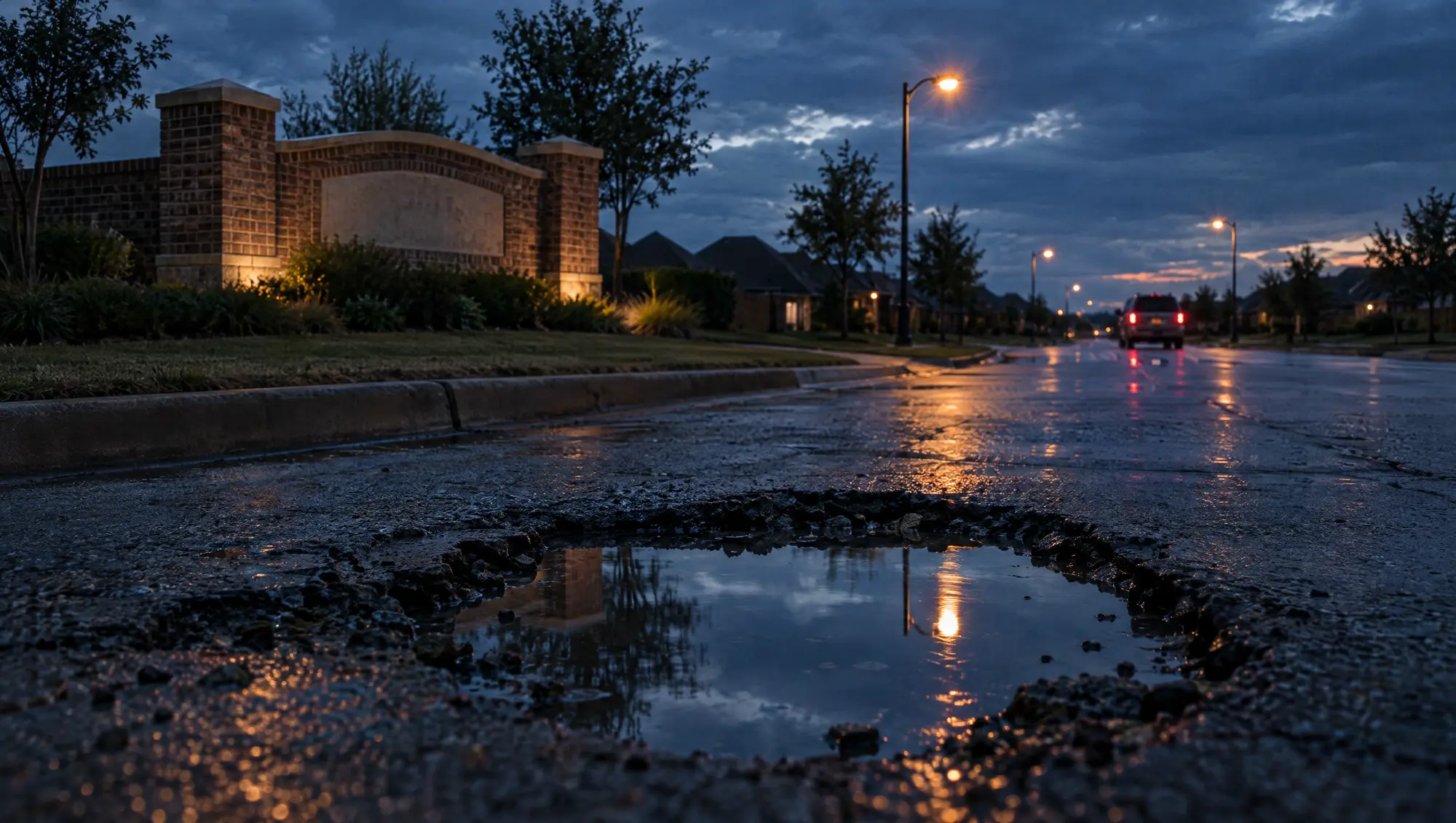
Voters do not turn out over a platform. They turn out over the pothole they hit every morning, the carpool line that blocks their driveway, and the stretch of road where people dump unwanted pets. We find those issues subdivision by subdivision, and we put them in front of the exact households who live with them.
What is micro-targeting in a political campaign?
Micro-targeting is using voter, property and consumer data to reach specific households with messages about what matters to them, instead of one message for everyone. URSA takes it to the subdivision level: we find the local problem a neighborhood actually complains about, then reach only the voters who live with it, through streaming TV, digital, mail, outdoor and peer-to-peer texting.
Close to Home Is What Gets People to the Polls
Ask a voter about school finance formulas or county budget policy and you will get a shrug. Ask them about the pothole at the entrance to their subdivision and you will get ten minutes. Issues that are close to home are concrete, they are personal, and the voter already believes something should be done. They do not need to be persuaded that the problem matters. They need to know who is going to fix it.
That is the opening for a campaign. When a candidate or a proposition is tied to a problem a neighborhood already feels, the election stops being abstract. It becomes a chance to do something about the thing that has been bothering them for months. That is a reason to vote, and in a low turnout local race a reason to vote is what decides it.
The catch is that every neighborhood's problem is different. A message about one subdivision's flooding means nothing to the next subdivision over, which floods fine but has a traffic problem. So we stop thinking in districts and start thinking in streets.
Nobody needs to be persuaded that the pothole matters. They need to know who is going to fix it.
What a Subdivision Level Issue Looks Like
These are the kinds of issues we look for. Small, specific, visible every day, and owned by the people who live next to them.
That naggy pothole
The one at the subdivision entrance that every resident hits twice a day and has reported more than once. Everyone in the neighborhood knows exactly which one you mean.
The carpool line
School pickup traffic that backs up onto the main road, blocks driveways and turns a two minute drive into twenty. Parents and their neighbors both feel it, every school day.
The road where people dump pets
A real case. A rural stretch where people abandoned unwanted dogs and cats. Residents were feeding them, worrying about them, and calling about them with no result. It was the issue that neighborhood cared about most.
The ditch that floods
The drainage that backs up into the same yards after every heavy rain. People remember the last flood far better than any campaign mailer.
Response times
The subdivision at the far edge of a fire or EMS district, where residents know how long the ambulance took last time. A strong reason to support an ESD.
The intersection
No light, no turn lane, too many close calls. Parents of new drivers can tell you every near miss.
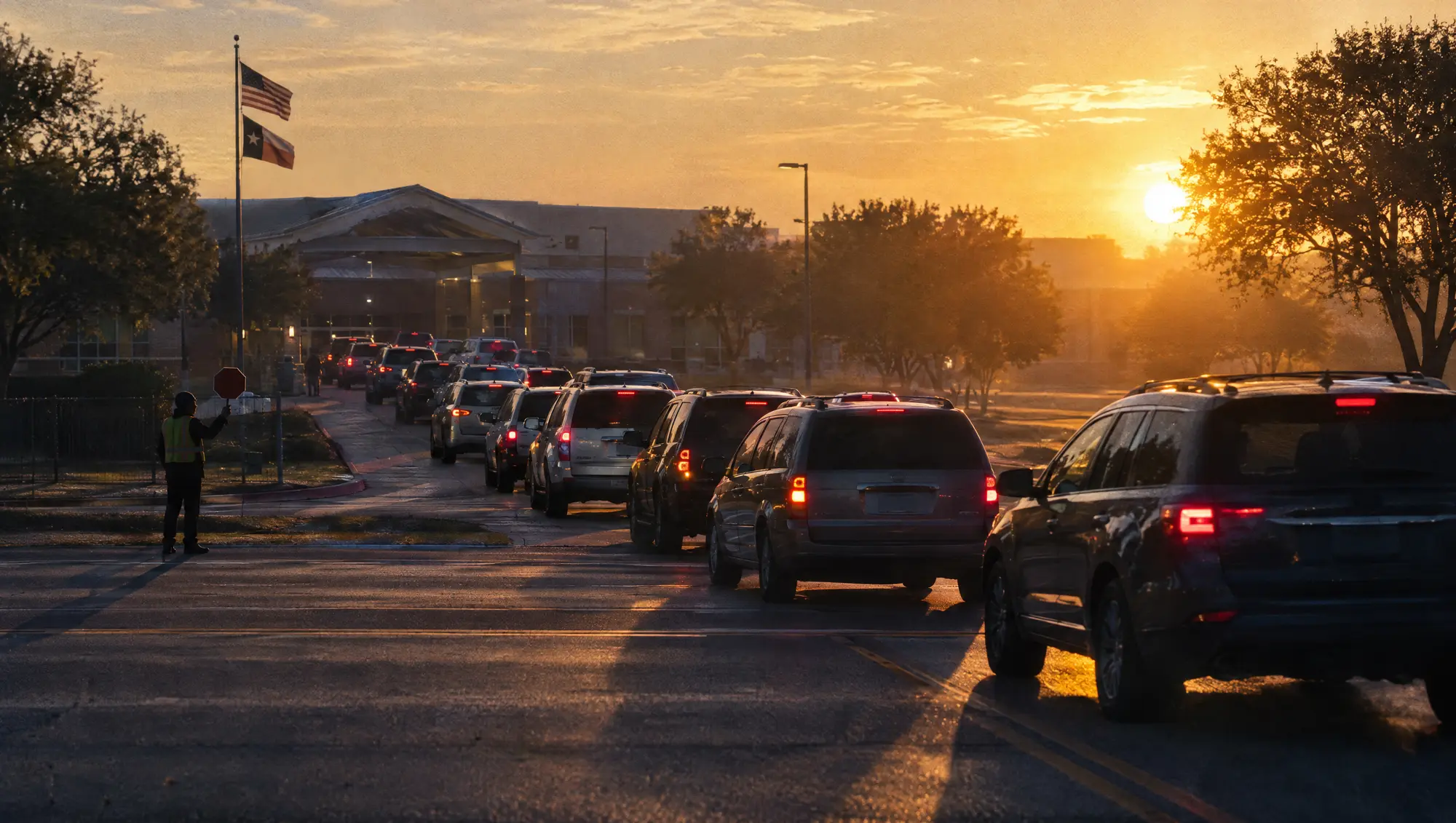
Twenty minutes to leave your own driveway.
Every school morning, the same parents sit in the same line. That is a reason to vote.
How We Find the Issues
Subdivision issues are not hidden. They are just scattered across places most campaigns never look.
Block walk notes
Volunteers walking with the Culper app log the issues voters raise at the door. Tagged to the household and mapped, a pattern shows up fast: the same complaint, the same few streets.
Neighborhood groups and HOA boards
Facebook groups, Nextdoor, HOA meeting minutes and newsletters are where neighbors complain to each other. We read them the way a reporter would.
Public records and service requests
Road complaints, drainage reports, animal control calls and commissioners court and city council agendas show what residents have already asked their government to fix.
Peer-to-peer conversations
A P2P text that asks "What is the one thing you would fix in your neighborhood?" gets honest answers. Culper records each answer on the voter record.
Property and voter data
County appraisal district (CAD) parcel data lets us draw the real boundary of a subdivision and tie each household to it. The voter file tells us who in that boundary votes, how often and in which elections.
From an Issue to a Target List
Once we know the issue, we build the universe that lives with it. Using CAD parcel data we select every address in the affected subdivision, or every home along the stretch of road, or every household within a set distance of the intersection. We match those addresses to the voter file with vote history, and layer third party data from L2 and i360 for modeled partisanship, issue interest and household details.
The result is a list we can name precisely. Not "voters in Precinct 42", but, for example, "the 1,140 registered voters in these three sections of the subdivision, of whom 610 voted in at least one of the last two local elections." Every channel then pulls from that same list in Culper: the streaming TV audience, the digital audience, the mail file, the outdoor placement and the P2P texting queue.
Because it is the same list everywhere, the message is consistent everywhere, and nobody outside the neighborhood pays to hear about a pothole they have never driven over.
One Race, Three Neighborhoods, Three Messages
An illustration of how a single county race might talk to three subdivisions. Same candidate, same values, three different reasons to vote.
| Neighborhood | What they live with | What they hear | Where they hear it |
|---|---|---|---|
| Subdivision A | Pothole at the only entrance | "You hit it every day. I will fix it in my first 90 days." | Outdoor board at the entrance, streaming TV, P2P |
| Subdivision B | Carpool line backing onto the main road | "Twenty minutes to get out of your own driveway. Here is my plan for the turn lane." | Digital during pickup hours, mail, P2P |
| Rural road C | Abandoned pets along the road | "Neighbors have been feeding them for a year. It is time the county showed up." | Mail, Facebook, door hangers, P2P |
Illustrative example. Messages are written for each race and must reflect what the candidate or committee will actually do.
How We Utilize Micro-Targeting
At URSA Dynamics, micro-targeting is more than a buzzword. It is a philosophy that guides our approach to campaign advertising. Microtargeting is the practice of using rich data analysis to identify the specific needs, preferences and concerns of individual voters. By understanding these unique attributes, we craft tailored messages that speak directly to each voter. It is not just about promoting a political candidate or a policy. It is about connecting with voters on a deeply personal level.
Steps and Strategies
Data analysis
We analyze voter, property and online data sources to identify the interests, behaviors and concerns of voters in your area.
Analyzing behaviors
We study how voters engage: how often they interact with political content, whether they share political posts, and whether they take part in online discussions about local or national politics.
Personalized messaging
Based on those insights, we create messaging that speaks directly to the individual voter. Whether it is a local concern or a personal value, our messages resonate because they are personal.
Precision targeting
We deliver tailored messages through the right channels at the right time. By understanding where your voters are and what matters to them, we make sure our messages not only reach them but make an impact.
Ethical consideration
We handle data ethically and transparently. Our approach is not about exploiting vulnerabilities. It is about connecting with voters authentically and responsibly.
Continuous adaptation
As the campaign progresses, we monitor engagement, feedback and reactions to the messaging and adapt the strategy based on the data we collect.
A campaign about a pothole is really a campaign about trust.
Fixing the small thing that a neighborhood has been ignored on is proof a candidate is listening. Voters extend that proof to everything else. Start with the issue at the end of their street and the rest of the platform gets a hearing.
How small can political targeting get?
With county appraisal parcel data and the voter file, a campaign can target a single subdivision, one section of a subdivision or the homes along one road. Some channels, like streaming TV and digital, need a minimum audience size to deliver, so we combine neighborhoods with the same issue or use mail, outdoor and P2P texting for the smallest groups.
What data sources does URSA use for micro-targeting?
We combine the voter file with vote history, county appraisal district (CAD) parcel data, early voting rosters during the election, licensed third party data from providers such as L2 and i360, and issue information gathered from block walks, P2P conversations and public records. It all comes together in Culper.
Is micro-targeting only for big campaigns?
No. It matters most in small races. A city council, ESD or school board election may be decided by a few hundred votes, so reaching the right few thousand households with the right reason to vote is the whole game, and it keeps a small budget from being wasted on people who will never vote in that race.
Do you target based on sensitive personal information?
No. We target on public voter and property records, licensed political data, and the issues people tell us about. We do not use health information, and we never reveal an individual's vote history in any message.
Keep reading.
- Strategic OutdoorBillboards that point at the problem. URSA uses micro-targeting to place outdoor boards, digital boards and signs where the issue lives, like "I will fix this pothole" with an arrow pointing straight at it.
- Streaming TVConnected TV puts a campaign ad on the living room TV of the exact voters who decide a race. URSA pairs streaming TV with CAD data, voter history, L2 and i360 to reach them without waste.
- Persuasion PsychologyWhy "go vote" fails and a one to one ask works. URSA writes persuasion scripts for Culper peer-to-peer texting that turn supporters into voters, built on decades of turnout research.
Your victory starts here.
Tell us where you are running or what is on your ballot. We will show you who decides it, what moves them, and what it costs to reach them.
Schedule a Consultation