
The ballot says "THIS IS A PROPERTY TAX INCREASE." Now what?
School bond and tax rate elections are decided by the taxpayers who find the propositions at the bottom of the ballot and know what they mean. We build those campaigns on the ballot language, the district's own numbers and parcel level property data, for the committees on either side.

How do you run a school bond election campaign?
Start with the ballot language and the real cost per home and business, then find the voters who decide it. In Texas, school bond propositions are listed separately by purpose and carry the words "THIS IS A PROPERTY TAX INCREASE." URSA uses county appraisal data to sort homeowners, seniors with a frozen tax ceiling, renters and business owners, gives each the argument that is true for them, and reaches them through streaming TV, digital, P2P texting and mail. We work for political committees supporting or opposing propositions, and on factual information for districts.
What Texas Voters See on a School Bond Ballot
Texas has made school bond ballots much more explicit. Bond money for different purposes must be split into separate propositions. Stadiums, natatoriums and other recreational facilities, performing arts facilities, teacher housing and technology equipment each have to stand on their own, with their own dollar amount. Each bond proposition must state its purpose and principal amount and say that taxes will be imposed to repay it, and today's ballots carry the words THIS IS A PROPERTY TAX INCREASE.
School districts also hold voter approval tax rate elections (VATREs) when they adopt an operating tax rate above the level state law allows without voters. Those propositions appear on the ballot as a tax rate, and the ballot says it is a tax increase.
That changes the campaign on both sides. Supporters cannot rely on goodwill toward schools alone, because every voter is reading the words tax increase. Opponents do not have to convince anyone it is a tax, because the ballot already says so. Either way, the side that wins is the one that reaches the voters who actually read to the bottom of the ballot, with a message that fits their own situation.
We know both sides.
We have run these campaigns for supporters and for opponents, so we know the other side's playbook before they open it.
Different Taxpayers, Different Arguments
Property taxes do not land the same way on everyone. County appraisal district (CAD) data tells us who is who, parcel by parcel, so each group hears the argument that applies to them.
| Voter | What is true for them | How that shapes the message |
|---|---|---|
| Homeowner under 65 | Pays on taxable value after the homestead exemption. A rate change shows up on next year's bill. | Their own annual cost, with a calculator to check it. |
| Homeowner 65 or older | In Texas, a senior's school tax on their homestead is generally frozen at a ceiling. A rate change may not raise their bill. | "Your taxes go up" rings false. Debt, the budget and accountability are what move them, and they vote at the highest rates. |
| Renter | Pays no property tax directly, but rental property pays the full rate with no homestead exemption. | The tax shows up in rent. |
| Business and multifamily owner | No homestead exemption and no appraisal cap on most commercial property, so the full rate applies to every dollar of value. | Their own exposure, in a direct letter from someone they know. |
Rules on exemptions, ceilings and caps change with new legislation. Every campaign uses the current law and the district's own published figures.
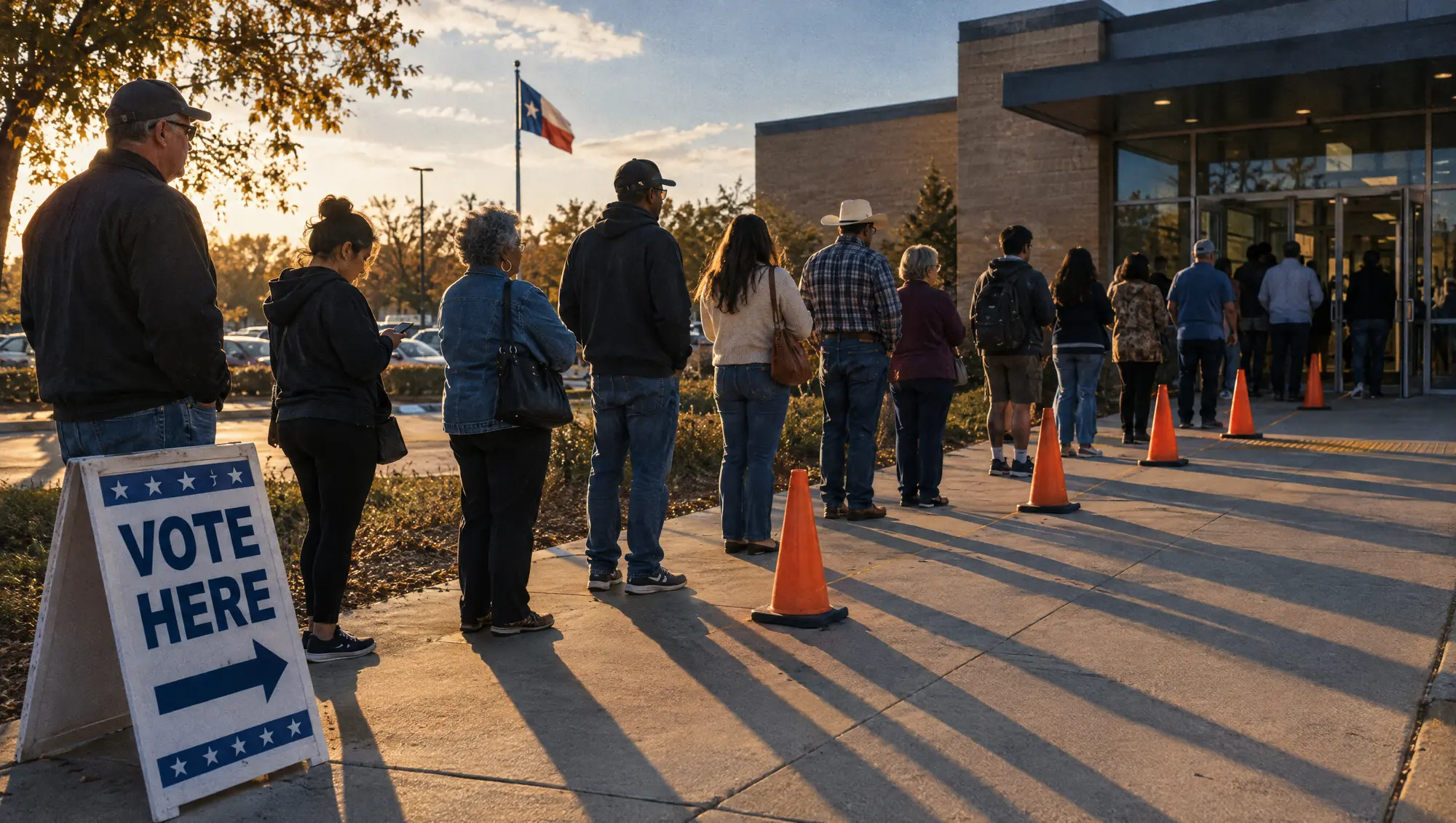
The bottom of a long ballot.
In November, school propositions sit under governor, Congress and the Legislature. The voters who reach them are the ones you told.
The Toolkit for a School Bond Campaign
Property tax calculator
A landing page where any homeowner enters their home value and sees what the proposition costs them each year. A number they found themselves is more persuasive than any number we tell them.
CAD based universe
Every parcel in the district from county appraisal records, tied to the voter file in Culper: who owns, who has a homestead, who is 65 and over, which parcels are commercial or multifamily.
Streaming TV
Household targeted streaming TV to likely voters in the district, by audience, switching to vote now when early voting opens.
Business owner letters
Owners of commercial and multifamily property, resolved to a decision maker, receive a signed letter with their own dollar exposure.
P2P texting
Peer-to-peer conversations with the most reliable supporters, using our persuasion scripts to turn agreement into turnout.
Geofencing at district events
Digital ads served to devices at district athletic events and community gatherings, where engaged parents and residents already are.
Daily early vote scrub
Each morning of early voting, voters who have cast a ballot leave every audience, so the budget moves to people who have not.
Find it on the ballot
In a November election, school propositions can sit at the very bottom of a long ballot. Every piece tells voters where to find them.
In November the risk is not that voters stay home. It is that they never reach the bottom of the ballot.
A May bond election is a small, quiet electorate. A November bond election rides on governor, Congress and the Legislature, with high turnout and propositions buried at the end. The campaign has to tell voters what is down there, and make the one line answer the thing they remember when they get to it.
How We Run It
The ballot and the math
Each proposition's language and amount, the tax rate, and what it costs real properties at each value, using the district's own figures.
The universe
Registered voters and addresses in the district, sorted by vote history, CAD property data and modeled issue scores into tiers.
The message matrix
Three core messages, and the version each audience hears. Answers prepared for everything the other side will say.
Live within days
Landing page, calculator, streaming, digital and texting launched fast, because bond campaigns are short.
Vote now
When early voting opens, every channel switches to the call to action, and the daily scrub begins.
School Bond Work, Both Sides
Video we have produced for and against Texas school bond propositions.

LCISD Bond Proposition Streaming TV Ad
Streaming TV spot for a vote for the Lamar Consolidated ISD bond propositions.

LCISD Bond Explainer
Explainer video for social on the Lamar Consolidated ISD bond propositions.

CFISD Bond Propositions, Vote No
Campaign video urging a vote against the Cypress-Fairbanks ISD propositions.
Why does a Texas school bond ballot say "This is a property tax increase"?
Texas law requires bond propositions to state their purpose and amount and that taxes will be imposed to repay the debt, and current ballots for school bonds and tax rate elections carry the words "THIS IS A PROPERTY TAX INCREASE." Campaigns on both sides have to plan around it.
Why are there several school bond propositions instead of one?
Since 2019, Texas requires school districts to put certain kinds of projects in separate propositions, including stadiums, natatoriums and other recreational facilities, performing arts facilities, teacher housing and technology equipment, so voters can decide on each one.
What is a VATRE?
A voter approval tax rate election (VATRE) is required when a Texas school district adopts a maintenance and operations tax rate above the rate state law allows without voter approval. Voters decide whether to ratify the higher rate.
Do school bond taxes affect seniors in Texas?
Homeowners 65 and older in Texas generally have their school taxes on their homestead frozen at a ceiling, so a rate change may not raise their bill on that home. That is why messages built on personal cost often do not move seniors, while messages about debt and accountability can.
Can a school district campaign for its own bond?
No. Texas Election Code Section 255.003 prohibits a school district from spending public funds on political advertising. A district may share factual information about the bond. Campaigns for or against are run by political committees with private funds.
Do you work for or against school bonds?
Both. URSA works for political committees that support or oppose school bond and tax rate propositions, and can provide factual voter information to districts. We take one side per election.
Keep reading.
- Passing a School BondThe URSA playbook for committees supporting a Texas school bond or tax rate election: the project list, the real cost per home, the senior tax ceiling, parents and staff, and turnout.
- Defeating a School BondThe URSA playbook for committees opposing a Texas school bond or tax rate election: the ballot language, the full cost with interest, existing debt, the budget, separate propositions and tax-sensitive turnout.
- Messaging and Campaign StrategyURSA builds the plan behind a winning campaign: the ballot and the math, who decides the race, what each audience needs to hear, the answers to the other side, and a timeline built around early voting.
Your victory starts here.
Tell us where you are running or what is on your ballot. We will show you who decides it, what moves them, and what it costs to reach them.
Schedule a Consultation