
The big screen, without the big waste.
Television is still the most powerful way to tell a campaign's story. Streaming lets us show that story only to the households who vote in your race, using county appraisal data, voter history and third party data from L2 and i360, and stop showing it the day they vote.
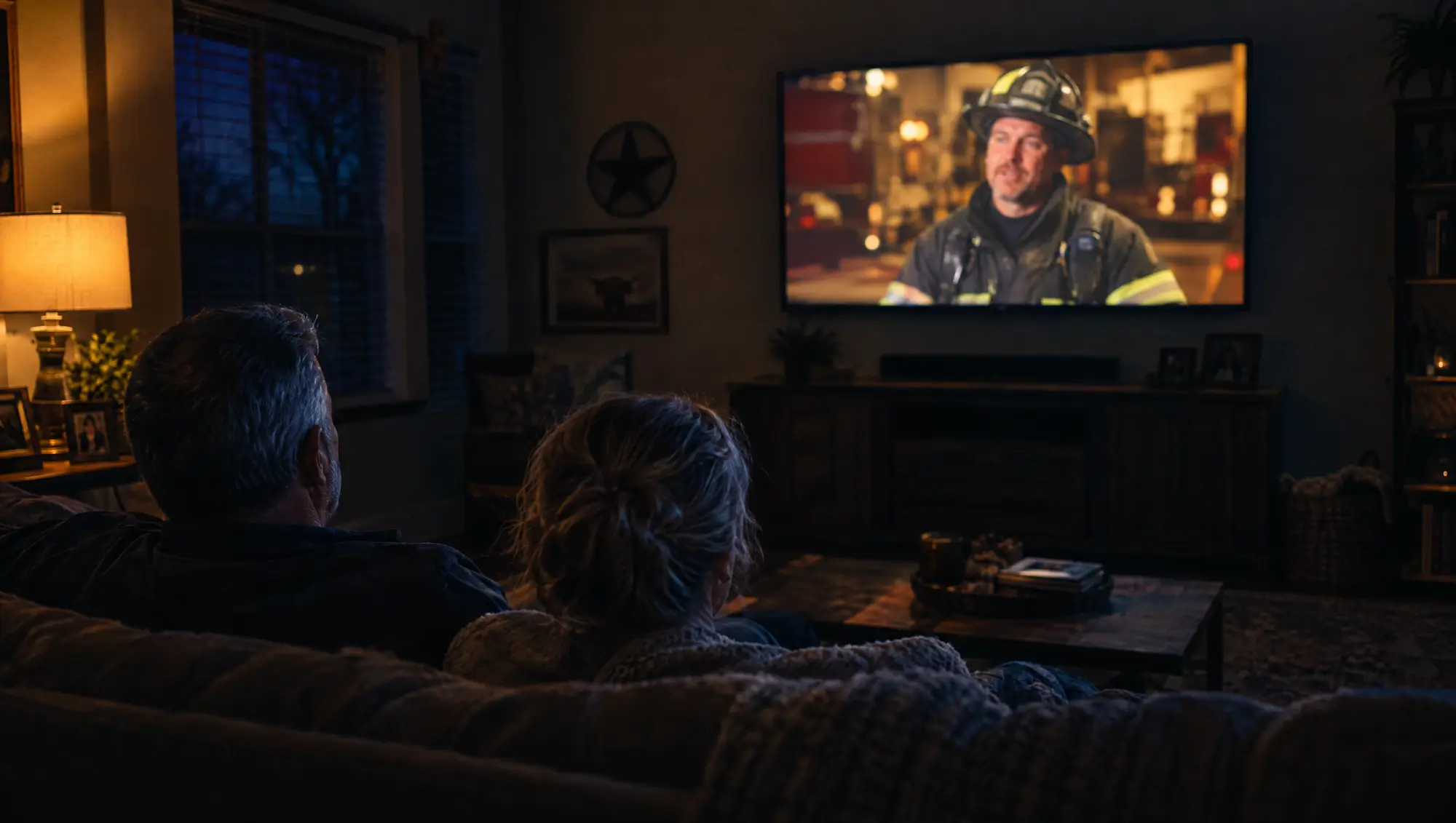
What is streaming TV advertising for political campaigns?
Streaming TV, also called connected TV (CTV) or OTT, places video ads inside shows and live programming people watch through internet connected TVs and devices. Unlike broadcast, the ad can be served to specific households. URSA builds the audience from the voter file, county appraisal (CAD) data, vote history and L2 and i360 data in Culper, matches it to streaming households, and removes voters as they cast ballots.
How Far Television Targeting Has Come
For most of television's history a political ad could only be aimed at a whole media market. The Houston market, for example, covers more than a dozen counties and millions of households. A candidate for a county commissioner seat, a fire district or a school bond paid to reach every one of them to talk to the small share who could actually vote in that election. For local campaigns, TV was either unaffordable or almost entirely wasted.
Cable zones narrowed it somewhat, to groups of neighborhoods served by one cable system. Still blunt, and shrinking every year as households cut the cord.
Streaming changed the unit of targeting from the market to the household. When a viewer watches through a smart TV, a streaming stick or a streaming app, the ad is chosen for that household at the moment it plays. That means a 30 second spot can run on the living room TV of a 67 year old homeowner with a frozen school tax ceiling who has voted in every November election for a decade, and not on the TV of the renter next door who has never voted in a local race.
It is the same full screen, sound on, can't skip story telling that made television powerful in the first place, now delivered with the precision of direct mail.
Broadcast pays to reach millions of viewers to find a few thousand voters. Streaming starts with the voters.
Broadcast, Cable and Streaming Compared
| Broadcast TV | Cable zones | Streaming TV (CTV) | |
|---|---|---|---|
| Unit of targeting | Entire media market | Groups of neighborhoods | Individual households |
| Fits a district boundary | No | Roughly | Yes, by address match |
| Can target by vote history | No | No | Yes |
| Can stop after someone votes | No | No | Yes, with a daily scrub |
| Reaches cord cutters | Partly, with an antenna | No | Yes |
| Typical fit | Statewide and large federal races | Large county races | Any race, from an ESD to Congress |
The Data That Makes It Work
Streaming TV is only as precise as the audience you give it. We build ours from four layers, combined in Culper.
The voter file and vote history
Every registered voter in the district, and which elections they voted in. In a local race this is the most important filter there is, because most registered voters skip local elections.
County appraisal district (CAD) data
Parcel by parcel property records: who owns their home, who has a homestead exemption, who is 65 or older with a frozen school tax ceiling, and which properties are commercial or multifamily. For any tax or bond election, this is the difference between a message that lands and one that rings false.
L2 and i360
Licensed national voter and consumer data with modeled partisanship, issue scores, household composition and contact data. It fills in what public records do not say.
Early voting rosters
During early voting, the county's daily list of who has voted is matched back every morning. Voters who have cast a ballot leave the audience, so the budget moves to the people who have not.
From Voter File to Living Room
Define the universe
In Culper we select the voters who decide the race: for example, homeowners in the district who voted in two of the last four November elections and are not already strong opponents.
Deduplicate to the household
Streaming is bought by the household, not the person. We collapse the list to addresses so we are not paying to reach the same TV twice.
Match to streaming households
The address list is matched to the household graph our streaming partners use to place ads. Not every household matches, and we report the match rate honestly rather than padding it with lookalikes.
Set frequency and flight
Frequency caps keep the same household from seeing the spot so often it becomes noise. The flight is planned around mail ballot dates, early voting and Election Day.
Message by audience
Different spots for different households: seniors with a frozen tax ceiling, younger homeowners, parents. Each one hears the argument that is true for them.
Scrub and shift
When early voting opens, every spot switches to a vote now message and the daily early vote scrub begins removing voters who have already cast a ballot.
Report
Impressions, households reached, average frequency and completion rate, by audience, throughout the campaign. After the election we can compare turnout among reached households with similar households that were not.
What We Produce
Spots built for streaming
Most streaming placements are :15 and :30. We write and produce to that length from the start, with the message and the name in the first seconds.
Real people, real places
Local races are won on credibility. We shoot candidates, firefighters, teachers and neighbors where voters will recognize them.
Versions for each audience
One shoot, several cuts, so each audience gets the argument that matters to them without paying for multiple productions.
Compliance
Every spot carries the required political advertising disclosure, and we handle the platforms' political ad review and verification.
Streaming TV Spots We Have Produced
A few of the spots we have produced and placed on streaming TV for local races.

Waller County CAD Election Streaming TV
Streaming TV spot for a Waller County Assistance District election.

Judge Chris Morales
Local Election Streaming TV

Fort Bend County Judges Campaign
Local Political Campaigns on Streaming TV

Vincent Morales, Local Elections Matter
Vincent Morales on why local elections matter.
Every impression should land on a voter who decides your race.
Broadcast asks a local campaign to pay for millions of viewers to reach thousands of voters. Streaming, built on real voter and property data, flips that. The budget goes to the households that matter, and stops when they have voted.
What is the difference between CTV and OTT?
Connected TV (CTV) refers to ads watched on a television through an internet connection, such as a smart TV or a streaming stick. OTT, or over the top, is the broader term for streaming content delivered over the internet on any device. In political advertising the terms are often used together for streaming video ads.
Can streaming TV ads target specific voters?
Streaming ads target households rather than individuals. A campaign's voter list is converted to household addresses and matched to the households streaming platforms can reach. Not every household matches, but those that do can be reached precisely, inside the district, by vote history and other data.
Is streaming TV affordable for local campaigns?
Often yes, because a local campaign pays only to reach households in its universe rather than an entire media market. A focused streaming flight to likely voters in a single district can cost far less than broadcast while wasting far fewer impressions.
Do political streaming ads need a disclaimer?
Yes. Political advertising generally must say who paid for it, under state law for state and local races and federal rules for federal races. Many streaming platforms also have their own political ad policies. URSA builds the disclosure into every spot.
How do you stop showing ads to people who already voted?
During early voting the county publishes who has voted each day. We match that roster to the campaign's universe in Culper every morning and remove those voters from the streaming audience, so the budget shifts to people who still need to vote.
Keep reading.
- Micro-TargetingURSA finds the issues voters feel at the end of their own street, like the pothole, the carpool line and the road where people dump pets, and targets those households with messages that drive them to vote.
- CulperCulper is our campaign platform: a voter database you can query in plain English, peer-to-peer texting, SMS and email, GPS verified block walking, sign tracking, coverage maps and a contact history for every voter.
- School District Bond ElectionsURSA runs campaigns for and against Texas school district bond propositions and tax rate elections, with property tax calculators, CAD based targeting, senior tax ceiling messaging and daily early vote scrubs.
Your victory starts here.
Tell us where you are running or what is on your ballot. We will show you who decides it, what moves them, and what it costs to reach them.
Schedule a Consultation